

The NSW Department of Education initiated a project to address the increasing prevalence of anxiety among primary school students, which was exacerbated by the COVID-19 pandemic.
The project aimed to create a universal program that could equip primary school communities with the tools to understand and manage anxiety, particularly among young children.
Before our engagement, the Department conducted a comprehensive discovery phase to understand anxiety in primary school settings. Our engagement was built upon this groundwork, allowing us to tailor our approach to the nuances uncovered during the discovery phase.
The Challenge
The problem identified through the discovery phase of the project was that there is no shared understanding of anxiety among children, caregivers, and school staff, which is hindering efforts to manage this issue. The project aimed to fill this critical gap by developing a comprehensive suite of resources to support children, caregivers, and school staff to understand better and manage anxiety that was blocking learning.
The desired outcomes included developing materials to help build anxiety literacy, enhance resilience and empower students to co-regulate with supportive adults and self-regulate to manage their anxiety effectively.
Resources were developed to be used at school and home with the children's and supportive adults' participation.
The challenge being addressed was complex, stemming from the need to accommodate a wide range of audiences with differing needs and preferences, including diverse geographies and cultural and socio-economic backgrounds across the state.

Our Approach
Our team has extensive experience ensuring safe and ethical interactions in complex environments.
Our approach focused on combining the expertise of clinical and educational experts with the tacit wisdom discovered within each school community. We believe that the best solutions emerge in complex systems through experimentation and continuous learning, rather than through adherence to a rigid, preconceived plan.
To complement our established human-centred design methods, we embraced emergent practices that emphasised experimentation, learning, and adaptability while remaining sensitive to each unique context and situation we encountered.
Our top priority was the safety of all participants, and we implemented universal design principles in all our activities and outputs. We aimed to create safe and respectful environments where diverse voices could be heard without fear of harm.
Our approach to universal design focused on simplicity and accessibility, ensuring that people with different developmental levels could easily engage with the content we created.
From discovery to experimentation
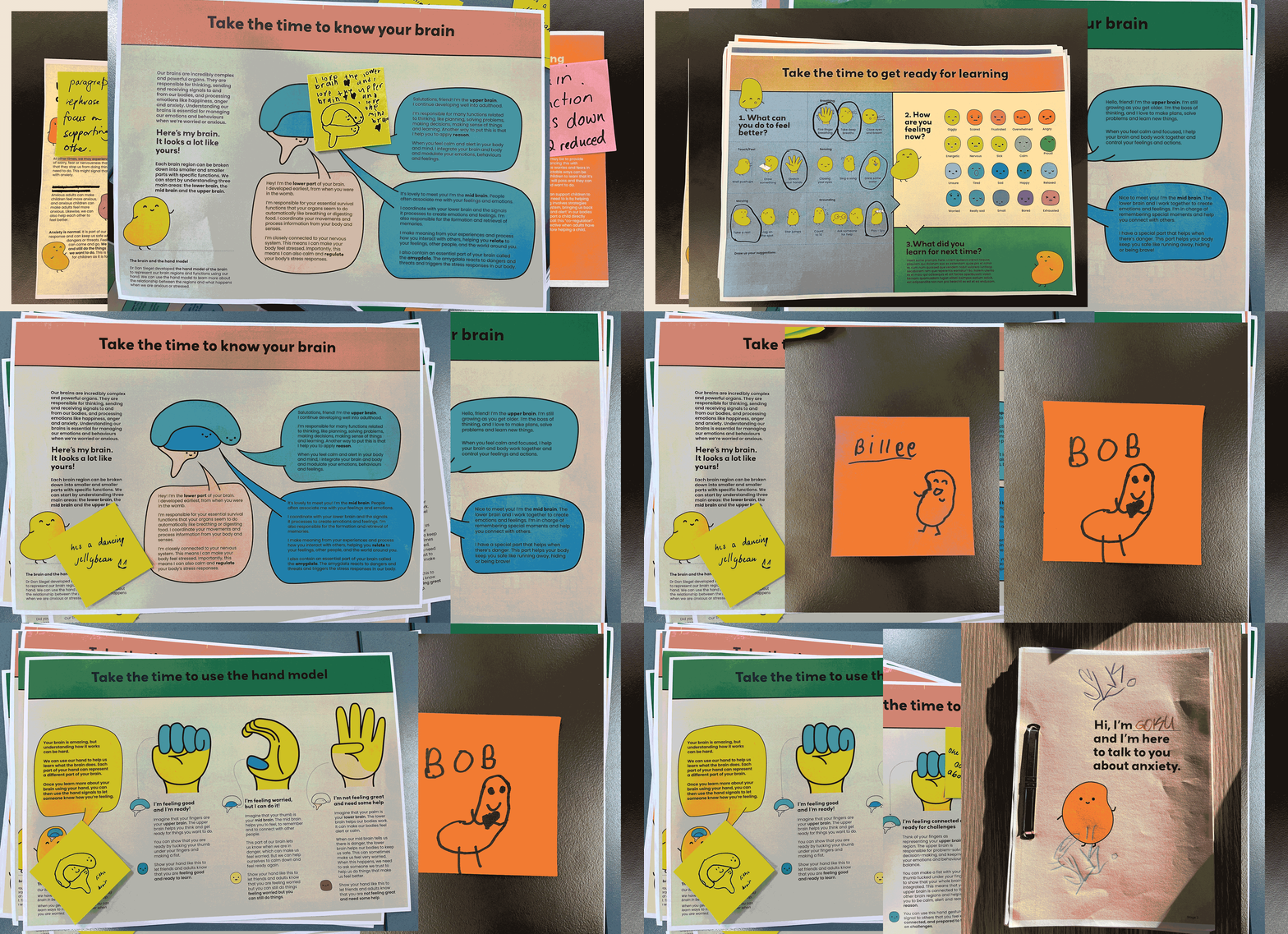
We centred our initial engagements around clinically informed play-based activities and open-ended discussions. These activities helped us understand audiences' current anxiety literacy levels and understand what resonated best.
From experimentation to prototyping
We combined the findings of our initial experiments with identified clinical frameworks to drive the initial design and content prototypes for the various audiences. The initial prototypes focused on three approaches to building anxiety literacy.
From prototyping to testing
We took the three prototype approaches back into schools for testing and iteration directly with students, educators and caregivers. We established key testing criteria and encouraged stakeholders to provide ‘frank and fearless’ feedback to the team.
From testing to solutions
Dedicated design sprints between engagements allowed the team to develop and test the content and designs with members of the project’s Advisory Group. The materials quickly emerged into a comprehensive suite suitable to the needs of the audiences we engaged.
Outcomes
Our collaborative efforts created a dynamic suite of anxiety literacy materials tailored for primary school communities.
These materials represent a significant leap forward in promoting emotional wellbeing and anxiety resilience among students, educators and caregivers.
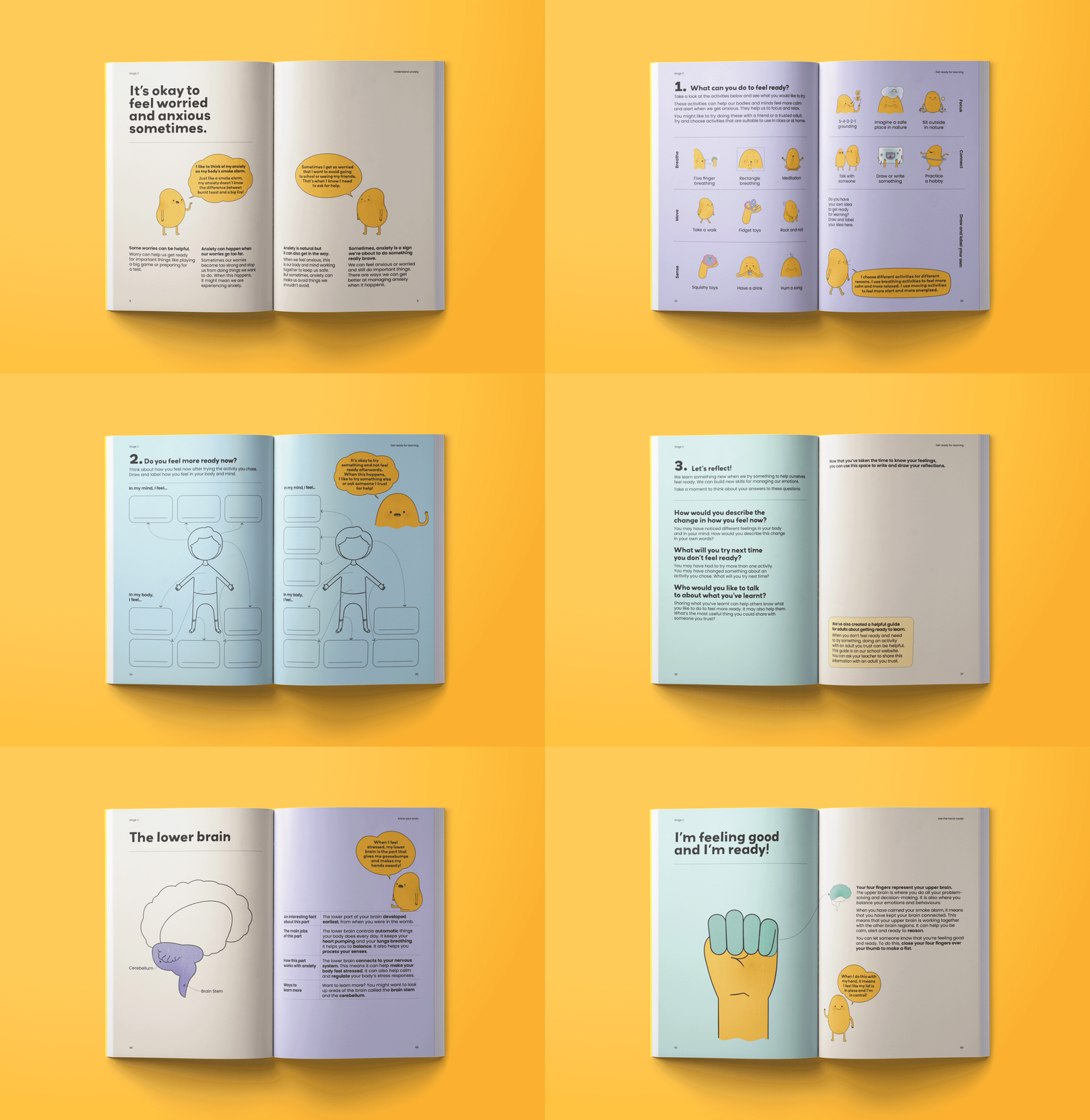
The suite comprises booklets and worksheets for students, classroom and home posters, background information for supportive adults and versatile assets for educators.
The content is comprehensive and flexible, ensuring accessibility for diverse audiences with varying literacy levels and experiences. Including a relatable character, Bean, adds a personal touch to the materials, serving as a guide and fostering connections, particularly with students with unique learning and developmental needs.
Looking ahead
The next phase of work for The Department involves launching a comprehensive pilot program to deploy the anxiety literacy materials in selected primary schools across NSW. The pilot phase is strategically designed to evaluate the effectiveness and adaptability of the materials in real-world educational settings.
We produced several key recommendations across three strategic horizons to create the conditions for the successful future adoption of these materials across all primary schools in NSW.
- Supporting the program's pilot phase with recommendations for the immediate future of the pilot program and evaluation, emphasising supporting communities of practice and meaningful communication of the program.
- Supporting the program's long-term future with recommendations for the longer-term future of the program, focused on integration with existing initiatives, expanding the reach of the materials and enhancing the program's digital presence.
- Enhancing the broader wellbeing program ecosystem by connecting and integrating components, initiatives, and programs within and across state government departments.
Acknowledging the uniqueness of every community, we express optimism for the future adoption of the materials contributing to a generation of emotionally resilient individuals.

Reflections
“I like it all because it helps you to think and be more calm… it makes you feel like someone is supporting you.”
– Student, Albury region
"The project was both challenging and fulfilling, involving diverse locations and complex subject matter. We responded flexibly and sensitively to a range of unique situations while pushing far beyond the initial expectations of what the materials could become. Our deep and trusting partnerships with the Department and the communities we worked with were instrumental to our success. I’m so proud of what we created together."
– Adam Corcoran, Principal Design Strategist
Team
- Olivia Gregory, Senior Producer
- Adam Corcoran, Principal Design Strategist
- Shoni Ellis, Senior Content Strategist
- Belinda Donald, Principal Design Strategist
- Ash Colcott, Experience Designer
- Willhemina Wahlin, Senior Design Strategist
- Jen Yani, Senior Communication Designer
- Joe Sciglitano, Design Director
Continue reading about our work
Sign up to our email newsletter to get updates about our events, work and research
